

Welcome back readers.
We’ve got a sizable issue to kick things off this year, with twenty fresh picks. If you want to peruse an even huger issue, I would implore you to check out Kaile’s end-of-year recap, bringing together many of our favourite articles we highlighted in 2025 as well as a whole bunch of equally-rad pieces we didn’t catch the first time around. Kaile’s put together a real feast, so please check it out, and while you’re at it, give our Patreon a look!
This Week in Videogame Blogging is a roundup highlighting the most important critical writing on games from the past seven days.
Immersion Blend
Let’s start our reading this week with a trio of industry-minded pieces (that’s both the games industry and the games press). Here we’re looking at labour, play values, and that albatross, immersion.
- How the Cost and Effort of Human Voice Actors Compares to Generative AI | This Week in Videogames
Maddie Agne talks to industry voice actors to gain a sense of the costs being saved–or not being saved–when studios replace human talent with generative voices (Further Reading: Edmond Tran talks to concept artists about how LLMs have upended their profession). - What’s Left for the Young Games Journalist, Critic | Not Safe For Who?
Ana Valens reviews the last decade in games press and contemplates paths forward from here (Further Reading: Kaile Hultner on criticism at the margins). - Against Immersion: The Holodeck Must Burn | Celia Wagar’s CritPoints
Celia Wagar delves into the pitfalls of immersion as a play and design value, its conflicts with artifice, and its close associations with white supremacy and reactionary politics (Further Reading: Simon Liu on What Remains of Edith Finch).
“I don’t believe immersion is a unique psychological state. I don’t believe it is ever possible to completely prevent metacognition. I don’t think it’s helpful to remove or conceal artifice from works of art. And I don’t think it’s healthy or productive to choose to sacrifice your enjoyment of a work of art over something as trivial as whether it provokes you to think about it as something other than an all-encompassing fantasy.”
Test Build
There’s a bit of fluidity between sections this week, but for this next grouping let’s move into design and genre inquiries.
- Pay Attention to Incomplete Games | Stop Caring
Khee Hoon Chan highlights the unique value of unfinished games, of which we see comparatively few. - new Quake map: “One Need Not Be A House” for Quake Brutalist Jam 3 | Radiator Blog
Robert Yang debriefs on the design ethos of his recent contribution to the third Quake Brutalist Jam (Further Reading: Robert’s previous writing on the Quake modding scene). - The Ship of Xerneas | Gamers with Glasses
Samantha Trzinski contemplates what defines a long-running series like Pokémon over the years as small design changes replace the original components plank-by-plank (Further Reading: Cind on Kabuto Park). - running is a roguelite | one more run
Grayson Morley considers the commonalities between two categories of runs.
“In 2026, I’m excited to run more, but I’m also excited to play more. A hobbyist mindset can pay dividends if one commits to it. Whether you are a fledgling runner, gamer, musician, or cook, may you challenge yourself with a smooth onramp. Games are great simulators of the pleasures of slowly building from nothing. Life can be similar, if you let it be.”
Table and Summit
Two interviews this week, focused on tabletop and climbing games.
- Climbing Games: How an IRL Trend Became a Video Game Genre | Superjump
Tomás Neumann Aspee chats design and inspiration with a variety of developers working on games about climbing (Further Reading: Lotus on PEAK). - Inspired Wonder: The Old King’s Crown is a Game Created of Chance and Circumstance | Unwinnable
Luis Aguasvivas chats with tabletop designer Pablo Clark about The Old King’s Crown, inspirations and influences old and new, and cultivating wonder (Further Reading: Josefina Huq at Melbourne International Games Week).
“Anachronistic is the game’s mix of old and new. Hard to place at first, but the influences of reiner Knizia, western high fantasy, and games played across millennia dance among the worlds of Hayao Miyazaki, and the best of modern board game complexity to form a strand of the game’s double helix. As I learned its rules and played in its brutal world of decaying decadence and factional opportunism, I entered a state of jamais vu. Whichever of the four factions you choose to play as, you must be cunning and at times conniving to get ahead. No mercy for the enemy (or friends).”
Mouse and Meal
Next we have two longer sections for you. This one brings together the single-game topics.
- In 2025, Elden Ring Nightreign was my playground for experimentation | Eurogamer
Kelsey Raynor sees Nightreign as a crucible of experimentation–for players and FromSoft alike (Further Reading: Maddy Myers on Nightreign). - A Game About Chicken Fillet Rolls Hits Emotionally—And In The Stomach | No Escape
Kaile Hultner tucks into a full meal of a Twine game (Further Reading: Madison Butler on the jobwich). - Overboard! | Indie Hell Zone
Dari enjoys a little murder mystery from Inkle. - In 2025, Winter Burrow showed how a little kindness goes a long way | Eurogamer
Marie Pritchard ponders the power of small kindnesses in a woodland survival game about mice. - 057: Rockman 7 EP | canon fire
Amr Al-Aaser checks out an engaging and extensive Rockman 7 romhack with kaizo-like personality (Further Reading: Ara Maybury on Mega Man 2).
“Rockman 7 EP is easily one of the most impressive ROM hacks I’ve had the pleasure of playing through. EP is both a technical and design showcase, with a radical approach with ideas that push the boundaries of the original game and what the larger series could look like. It intentionally reaches unreasonable levels of chaos and difficulty in pursuit of spectacle, but in the process creates one of the most mechanically satisfying takes on the series.”
Even in Arcadia
These next five focus more on affect and experience.
- Every Character Creator Is A Fight With Identity That I’m Losing | Unwinnable
Branden Lizardi reckons with the weight of perception–and self-perception–on the character creator screen (Further Reading: Wallace Truesdale on Nitro Gen Omega). - I Don’t Like How Some Of You Guys Have Been Talking About to a T | Medium
Hiero de Lima muses on themes of disability and acceptance in Keita Takahashi’s latest (Further Reading: Chris Kerr’s recent interview with Takahashi). - Facing Loss in Kirby’s Forgotten Land | Crossplay
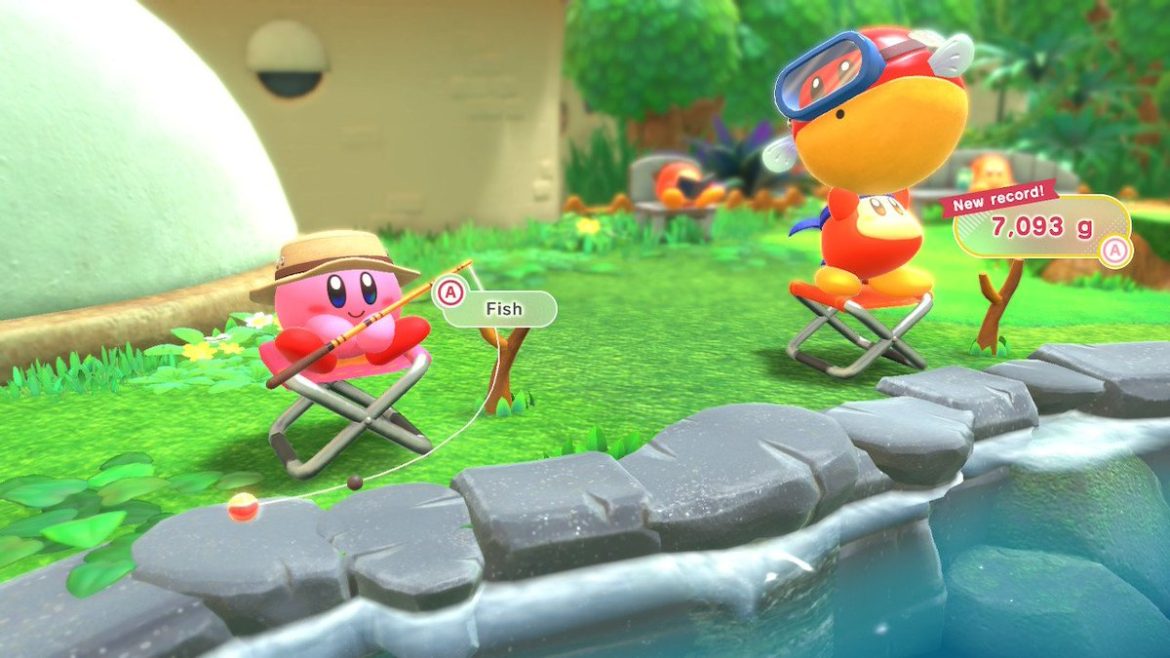
Sarah Doherty learns from her daughter about processing grief in Kirby and the Forgotten Land (Further Reading: Joseph Earl Thomas on the fantasy of playing Final Fantasy). - Madeline Blondeau Reflects On Finding Faith At The Arcade And The Feet Of Mother Mary | startmenu
Madeline Blondeau keeps the faith through capitalism, the games industry, and the arcades of the PNW. - GAME OF THE YEAR | DEEP-HELL
Skeleton reflects on her time in a Neverwinter Nights roleplay server (Further Reading: Skeleton on art, purpose, and play).
“I have, thus far, logged 400 hours in Prisoners of The Mist trying to escape the rapidly dawning end of the year. Many of my characters have started to be affected by the strange broken world they find themselves in. It is a broken world where when I reach out a hand touches mine often. I wanted to be honest with myself when I was looking for what actually mattered to me as the year drew to a close. Scrolling down lists of the things I’ve played and reviewed and finally that’s just it: The game of the year is the one we take with us. It can’t be more complicated than that.”
Critical Chaser
We sign off for the week with an intriguing relic of Christmas past.
- Father Christmas | CD-ROM Journal
Misty De Méo shares a curious little multimedia artifact for the holidays (Further Reading: Misty on Jingle Cats).
“One of the strangest artifacts of video games as a global medium is that games aren’t always developed in the places they’re meant to be released. It must be a strange experience developing a game knowing that people in your own country are unlikely to ever see it. The subject of this post is one of those games: developed by a British team located in the UK, based on a series of books by a British author, but published exclusively in Japan.”
Subscribe
Critical Distance is community-supported. Our readers support us from as little as one dollar a month. Would you consider joining them?
Contribute
Have you read, seen, heard or otherwise experienced something new that made you think about games differently? Send it in!